

The First Opium War Great Britain - UPSC World history
Watch Video


Study smarter with Pi Lens
Get Notes, PYQs, Quiz and more for any Youtube video!
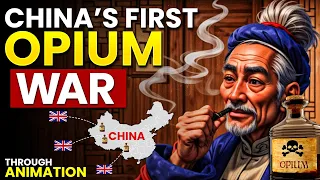
The First Opium War Great Britain - UPSC World history
1 views

PW OnlyIAS Prarambh
Notes
Video Summary
The First Opium War: British Colonial Expansion and Chinese Resistance
Background and Precipitating Factors
The First Opium War marked a turning point in Chinese history, fundamentally altering the nation's trajectory and psyche. The roots of the conflict lay in the trade imbalance between Great Britain and China, with Britain importing large quantities of tea and paying in silver, while China restricted British access to its markets. British efforts to open trade were rebuffed, leading to alternative strategies to correct the trade deficit.
- British Demand for Tea: Tea was introduced to Britain in 1650, and by the late…
The First Opium War: British Colonial Expansion and Chinese Resistance
Background and Precipitating Factors
The First Opium War marked a turning point in Chinese history, fundamentally altering the nation's trajectory and psyche. The roots of the conflict lay in the trade imbalance between Great Britain and China, with Britain importing large quantities of tea and paying in silver, while China restricted British access to its markets. British efforts to open trade were rebuffed, leading to alternative strategies to correct the trade deficit.
- British Demand for Tea: Tea was introduced to Britain in 1650, and by the late 18th century, British society had become heavily dependent on it.
- Trade Imbalance: Britain paid China in silver for tea, causing a significant outflow of wealth.
- Failed Diplomacy: In February 1793, British ambassador John Macartney attempted to negotiate trade access with the Chinese Emperor Qianlong but was rejected.
- British Strategy Shift: To address the trade imbalance, Britain began exporting opium, a highly addictive drug, to China.
The Opium Trade and Its Expansion
The opium trade became the linchpin of British efforts to reverse the trade deficit with China. The British East India Company orchestrated large-scale opium production in India, exploiting both land and labor to fuel the trade.
- Production Centers: Bihar, Bengal, and Malwa in India became the main centers for opium cultivation.
- Forced Labor: Factories in Ghazipur and Patna employed people of all ages, often under coercion, to process opium.
- Trade Mechanism: Opium was exchanged for tea, with the British using the drug as a payment medium.
- Contradiction: Britain imposed harsh anti-opium laws domestically while promoting addiction in China for economic gain.
Impact on Chinese Society
The influx of opium had devastating effects on Chinese society, leading to widespread addiction and social unrest. The unchecked flow of the drug undermined the social fabric and weakened the Qing dynasty.
- Rising Addiction: By 1829, excessive opium use had permeated Chinese society.
- Imperial Response: The Chinese emperor imposed a complete ban on opium, but British smuggling continued unabated.
- Social Consequences: The addiction crisis contributed to instability and set the stage for future rebellions.
Outbreak of the First Opium War
The immediate trigger for the war was the Chinese government's decisive action against the opium trade. British resistance to Chinese enforcement measures escalated into open conflict.
- Seizure and Destruction: In 1839, Emperor Daoguang ordered the seizure and destruction of opium stocks.
- British Reaction: Britain declared war in response, initiating hostilities that lasted from 1839 to 1842.
- Theatres of War: Major battles occurred along the Pearl River, Yangtze River, Yellow Sea, Canton, and Macau.
British Military Superiority and Chinese Defeat
British forces leveraged their advanced naval and artillery capabilities to secure victory over the Chinese. The technological gap proved decisive in the outcome of the war.
- Naval Power: British superiority at sea allowed for effective blockades and bombardments.
- Artillery Advantage: Advanced weaponry gave British forces a significant edge in engagements.
- Chinese Losses: The Qing dynasty was unable to match British firepower, leading to defeat.
Treaty of Nanking and Its Provisions
The war concluded with the signing of the Treaty of Nanking on August 29, 1842. The treaty imposed severe terms on China, marking the beginning of the so-called "Century of Humiliation."
- War Indemnity: China was forced to pay heavy reparations to Britain for war damages.
- Territorial Concessions: Hong Kong and the Kowloon Peninsula were ceded to British control.
- Opening of Ports: Several Chinese ports were opened to British trade.
- Supplementary Treaty: The Treaty of Bogue (October 1843) further compelled China to grant Britain "most favored nation" status and legalize the opium trade.
Socio-Political Consequences in China
The aftermath of the war had profound effects on Chinese society and governance. The imposed treaties and continued opium trade deepened social unrest and weakened the Qing dynasty.
- Legalization of Opium: Under British pressure, China was forced to legalize the opium trade.
- Social Unrest: The continued spread of addiction contributed to widespread disorder, eventually fueling the Taiping Rebellion.
- Dynastic Weakening: The Qing dynasty's inability to resist foreign pressure led to further internal decline.
British Parliamentary Debates and Moral Critique
The morality of the opium trade was a subject of debate within Britain itself. Parliamentary inquiries were conducted, but economic interests ultimately prevailed.
- Parliamentary Inquiries: The British Parliament debated the ethics of the opium trade in the 1830s, 1840s, 1870s, and 1890s.
- House of Commons Committee: A committee was formed to investigate, but it exonerated Britain from wrongdoing.
- Criticism by Intellectuals: Thomas Manuel described the trade as a system where "the Chinese got opium, the British got tea, and the Indians got colonialism." Dadabhai Naoroji called the opium trade "a sin on England's head and a curse on India."
The Century of Humiliation and Long-Term Impact
The First Opium War initiated a period in Chinese history known as the "Century of Humiliation," characterized by foreign domination and national trauma. The legacy of the war shaped Chinese attitudes toward sovereignty and foreign relations.
- National Psyche: The phrase "If you are backward, you will take a beating" reflects the deep psychological impact on the Chinese people.
- Colonial Entrenchment: The lucrative opium trade strengthened British colonial rule in India and entrenched foreign influence in China.
- Historical Memory: The period from the First Opium War to the Chinese Civil War in 1949 is remembered as a time of national suffering and humiliation.
Key Takeaways for Competitive Exams
Understanding the First Opium War is essential for grasping the dynamics of colonialism, international trade, and the transformation of Asian societies in the 19th century. The conflict exemplifies the intersection of economic interests, military power, and social consequences.
- Trade Imbalance as Catalyst: Economic motivations were central to the outbreak of the war.
- Role of Opium: The opium trade was both a tool of economic leverage and a source of social devastation.
- Treaty System: The Treaty of Nanking and subsequent agreements institutionalized foreign privileges in China.
- Societal Impact: The war's aftermath contributed to internal instability and the eventual decline of the Qing dynasty.
- Moral and Political Debates: The conflict sparked ongoing debates about the ethics of imperialism and the responsibilities of colonial powers.
- Historical Significance: The First Opium War set the stage for further foreign intervention and shaped modern Chinese nationalism.
Notable Quotes and Perspectives
Perspectives from historians and contemporary critics highlight the broader implications of the opium trade and the war.
- Thomas Manuel: "The Chinese got opium, the British got tea, and the Indians got colonialism."
- Dadabhai Naoroji: "Opium trade is a sin on England's head and a curse on India for her share of being the instrument."
- Chinese Proverb: "If you are backward, you will take a beating," encapsulating the lesson drawn from the national trauma.
Summary Table: Key Events and Outcomes
| Event/Action | Year(s) | Outcome/Impact |
|---|---|---|
| British tea dependence | 1650–1793 | Trade imbalance with China, silver outflow |
| Macartney mission | 1793 | Trade proposal rejected by Chinese emperor |
| Opium trade expansion | Early 1800s | British reverse trade deficit, social crisis |
| Opium ban in China | 1829 | Attempted crackdown, continued smuggling |
| Seizure of opium | 1839 | Triggered British declaration of war |
| First Opium War | 1839–1842 | British victory, Treaty of Nanking |
| Treaty of Nanking | 1842 | Indemnity, cession of Hong Kong, open ports |
| Treaty of Bogue | 1843 | Most favored nation status, opium legalized |
| Taiping Rebellion | After 1842 | Social unrest, weakening of Qing dynasty |
| British parliamentary debates | 1830s–1890s | Moral scrutiny, economic interests prevail |
The First Opium War stands as a critical episode in world history, illustrating the destructive potential of economic imperialism and the enduring consequences of colonial intervention.
Quiz
10 QuestionsClick on an option to find the answer
Question 1 of 10
Solution
Solution
Solution
Flashcards
5 CardsClick to reveal answerTap the card to see answer

