

Season 1, Episode 3 Complete Art - UPSC Art and Culture
Watch Video


Study smarter with Pi Lens
Get Notes, PYQs, Quiz and more for any Youtube video!
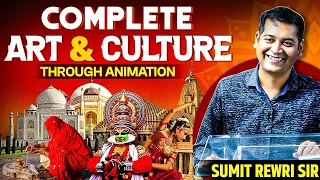
Season 1, Episode 3 Complete Art - UPSC Art and Culture
10 views

PW OnlyIAS
Notes
Video Summary
Indian Art and Culture: Architecture, Sculpture, Painting, Dance, Drama, Music, Philosophy, and Literature
Origins and Features of Indian Architecture
Indian architecture began with the Indus Valley Civilization (3000–1500 BCE), known for its advanced urban planning, water management, and standardized brick construction. Cities were divided into an upper citadel and a lower city, both fortified for defense. The citadel, built on an artificially raised mound, housed important buildings like assembly halls and granaries, while the lower city contained residential areas.
- Key features:
- Uniform brick size (length:width:thickness ratio of 4:2:1)
- Multi-storey houses, wells, drains, and bathrooms in…
Indian Art and Culture: Architecture, Sculpture, Painting, Dance, Drama, Music, Philosophy, and Literature
Origins and Features of Indian Architecture
Indian architecture began with the Indus Valley Civilization (3000–1500 BCE), known for its advanced urban planning, water management, and standardized brick construction. Cities were divided into an upper citadel and a lower city, both fortified for defense. The citadel, built on an artificially raised mound, housed important buildings like assembly halls and granaries, while the lower city contained residential areas.
- Key features:
- Uniform brick size (length:width:thickness ratio of 4:2:1)
- Multi-storey houses, wells, drains, and bathrooms in each house
- Granaries built on raised platforms with ventilation
- The Great Bath at Mohenjo-daro, possibly for ritual bathing
- Lothal’s dockyard, an early tidal port for international trade
No temples or religious structures have been found in Indus cities, nor evidence of weapons or war monuments.
Mauryan and Post-Mauryan Architecture
The Mauryan period saw large-scale construction for political and religious purposes, classified as court art (state-sponsored) and popular art (individual/folk). Major forms included palaces, pillars, and stupas.
- Mauryan pillars: Monolithic, made of Chunar sandstone, with a shaft, capital (often lotus or bell-shaped), abacus, and animal figure (e.g., Sarnath Lion Capital, now India’s state emblem).
- Stupas: Burial mounds for relics, symbolizing the cycle of birth and death (circular base) and nirvana (pinnacle). Elements include a hemispherical dome, spire, and parasol.
- Rock-cut caves: Early examples at Rajgir (Son Bhandar), Udayagiri, and Khandagiri, used as monastic shelters.
Post-Mauryan architecture continued these traditions, with new elements like chaitya (prayer halls) and vihara (monastic residences) in rock-cut caves (e.g., Ajanta, Karle, Nasik).
Temple Architecture: Evolution and Styles
Temple architecture developed significantly during the Gupta period and later dynasties, with regional variations.
Basic structure: Garbhagriha (sanctum), mandapa (hall), shikhara/vimana (superstructure), and vahana (vehicle of deity).
Three main schools:
- Nagara (North India): Built on raised platforms (jagati), sculpted walls, no large boundary walls or gateways, multiple shikharas, sub-styles like Chandela and Odisha.
- Dravida (South India): Hexagonal/octagonal plans, extensive boundary walls, tall gopurams (gateways), water tanks inside compounds, shikhara called vimana, deity sculptures on entrances.
- Vesara (Deccan): Hybrid of Nagara and Dravida, star-shaped bases, highly decorated but shorter shikharas, developed by Chalukyas, Rashtrakutas, Hoysalas.
Regional styles: Chandela (Khajuraho), Odisha (Konark Sun Temple), hill temples (Kumaon, Garhwal, Kashmir), Western Indian temples (Mount Abu Jain temples), Eastern Indian temples (Bengal’s Vanga style), Central Indian temples (Gupta-era Deogarh temple, 64 Yogini temples), Deccan (Ellora Kailasanath, Hoysala temples).
Medieval and Indo-Islamic Architecture
With the advent of Islam, new architectural forms emerged, blending Persian, Turkish, and Indian elements.
- Key features: Arches (mehraab), domes (gumbad), minarets, charbagh gardens, calligraphy, and jali (lattice) work.
- Imperial style: Delhi Sultanate (Qutb Minar, Quwwat-ul-Islam mosque, Tughlaqabad fort), characterized by use of arches, domes, and sloping walls.
- Provincial styles: Bengal (sloping roofs, brick and black marble), Malwa (colorful stones, large windows), Jaunpur (Atala mosque), Deccan (Bijapur’s Gol Gumbaz).
- Mughal architecture: Blend of Persian and Indian styles, use of red sandstone and marble, charbagh gardens, double domes, and decorative inlay (Taj Mahal, Agra Fort, Fatehpur Sikri, Humayun’s Tomb).
- European influence: Portuguese (Goa churches), French (Puducherry planning), British (Gothic, Indo-Gothic, and Indo-Saracenic styles—Victoria Memorial, Rashtrapati Bhavan).
Indian Painting: Types and Traditions
Indian painting traditions are ancient and diverse, classified into cave paintings, mural paintings, and miniature paintings.
Prehistoric cave paintings: Bhimbetka (Madhya Pradesh), Jogimara (Chhattisgarh), depicting humans, animals, and geometric symbols using ochre, yellow, green, and black.
Mural paintings: Large wall paintings in caves, temples, and palaces (Ajanta, Ellora, Bagh, Sittanavasal, Badami, Kerala murals), often depicting religious and mythological themes.
Miniature paintings: Small, detailed works on palm leaves, paper, or ivory, developed in various schools—Pala (Buddhist, Bihar/Bengal), Mughal (Akbar, Jahangir, Shah Jahan), Rajput (Mewar, Bundi, Kangra), Deccan, and Company style (colonial hybrid).
Folk and tribal paintings: Madhubani (Bihar), Pattachitra (Odisha), Warli (Maharashtra), Saura (Odisha), Pithora (MP/Gujarat), Kalighat (Bengal), Thangka (Northeast), Phad (Rajasthan), Cheriyal (Telangana), each with unique themes, techniques, and symbolism.
Indian Sculpture: Materials, Techniques, and Schools
Sculpture in India dates back to the Indus Valley, with stone, metal, and terracotta as primary materials.
- Indus Valley: Stone (bearded priest, male torso), bronze (dancing girl, bull), terracotta (mother goddess, animals), seals (Pashupati seal), and pottery (painted, perforated).
- Mauryan: Polished stone pillars, animal capitals, Yaksha/Yakshini figures, Northern Black Polished Ware pottery, rock-cut caves (Lomas Rishi).
- Post-Mauryan: Sanchi and Bharhut stupas with stone railings and toranas, Mathura and Gandhara schools (first Buddha images), Amaravati and Sarnath centers.
- Gupta: Refined, expressive sculptures of Buddha, Vishnu, Shiva, and Yakshas, with characteristic features (halo, curly hair, elongated ears).
- Medieval: Jain sculptures (Mount Abu, Shravanabelagola), Chola bronzes (Nataraja), and regional temple sculpture.
Indian Dance: Classical and Folk Forms
Indian classical dance is rooted in the Natyashastra by Bharata Muni, drawing elements from the four Vedas.
Eight classical dances (recognized by Sangeet Natak Akademi):
- Bharatanatyam (Tamil Nadu): Emphasizes hand movements, bent knees, five elements (Alarippu, Jatiswaram, Sabdam, Javali, Tillana), and Ekaharya (one dancer plays all roles).
- Kuchipudi (Andhra Pradesh): Started by male artists, features Daru (introduction), Manduka Shabdam (frog story), Tarangam (dancing on brass plate), Jalachitra Nrityam (drawing with feet).
- Odissi (Odisha): Three forms (Mahari, Nartaki, Gotipua), tribhanga posture, themes of Radha-Krishna and Dasavatara.
- Kathakali (Kerala): Storytelling through dance-drama, elaborate costumes, color-coded faces (green for nobility, red for royalty, black for evil).
- Mohiniyattam (Kerala): Solo female dance, white costume, feminine features, Carnatic music.
- Manipuri (Manipur): Emphasizes hand movements, minimal footwork, themes of Krishna and Raslila, promoted by Rabindranath Tagore.
- Kathak (Uttar Pradesh): Upright posture, no bent knees, themes of Radha-Krishna, both solo and group performances.
- Sattriya (Assam): Started by Shankaradeva, performed in monasteries, silk costumes, Borgeet songs.
Folk and regional dances: Chhau (Jharkhand, West Bengal, Odisha), performed with masks, themes of mythology and nature.
Indian Drama and Theatre Traditions
Indian drama has ancient roots, with regional forms reflecting local culture and language.
- North India: Bhanda Pather (Jammu & Kashmir), Swang (Haryana), Nautanki (Uttar Pradesh), Ramlila (UP), Ramlila (Uttarakhand, UNESCO heritage), Maach (Madhya Pradesh).
- East India: Bhavana (Assam, by Shankaradeva), Jatra (West Bengal), Bidesia (Bihar), Prahlad Natak (Odisha).
- South India: Burra Katha (Andhra Pradesh/Telangana), Mudiyettu (Kerala, UNESCO heritage), Theyyam (Kerala), Koodiyattam (Kerala, Sanskrit), Therukoothu (Tamil Nadu), Yakshagana (Karnataka), Dashavatara (Goa).
- West India: Tamasha (Maharashtra), Bhavai (Gujarat/Rajasthan).
Puppetry in India
Puppetry is an ancient Indian art form, with four main types:
- String puppets: Manipulated by strings (e.g., Kathputli in Rajasthan, Kundhei in Odisha, Gombeyatta in Karnataka, Bommalattam in Tamil Nadu).
- Shadow puppets: Figures cast shadows on a screen (e.g., Tholu Bommalata in Andhra Pradesh, Ravana Chhaya in Odisha).
- Glove puppets: Worn on the hand like gloves (e.g., Pavakoothu in Kerala, Benipatol in West Bengal).
- Rod puppets: Manipulated by rods (e.g., Yampuri in Bihar, Putul Nach in West Bengal, Kathi Kandhe in Odisha).
Indian Music: Systems, Styles, and Instruments
Indian music traces its origins to the Samaveda and Gandharva Veda, with three pillars: swara (notes), raga (melody), and tala (rhythm).
Swara: Seven notes—Sa, Re, Ga, Ma, Pa, Dha, Ni.
Raga: Combination of notes; five-note (audava), six-note (shadava), seven-note (sampurna) ragas; six principal ragas in Hindustani music, 72 in Carnatic.
Tala: Cyclic rhythm patterns; teen taal (16 beats) is most common.
Hindustani vs. Carnatic:
- Hindustani: Influenced by Persian/Arab, more instrumental, gharana system, raga tied to time/season.
- Carnatic: Indigenous, vocal emphasis, 72 ragas, less time/season restriction.
Major styles: Dhrupad (oldest, temple origin), Khayal (imagination, started by Amir Khusro), Thumri (light, romantic), Tarana (meaningless syllables), Tappa (quick phrases, written in Punjabi but sung elsewhere).
Folk music: Varying by region (e.g., Vanav in Kashmir, Pandavani in Chhattisgarh, Mando in Rajasthan, Dandiya in Gujarat, Ovi in Maharashtra).
Indian Philosophy: Six Schools and Other Systems
Indian philosophy addresses the four aims of life: dharma, artha, kama, moksha. The six orthodox schools (shad-darshanas) are:
Nyaya (Gautama): Logic and reasoning, knowledge through perception, inference, and hearing.
Vaisheshika (Kanada): Atomism, all objects made of atoms, five elements (earth, water, fire, air, sky).
Samkhya (Kapila): Dualism of nature and spirit, liberation through knowledge.
Yoga (Patanjali): Control of mind and senses through yoga for liberation.
Purva Mimamsa (Jaimini): Justifies Vedic rituals using reasoning.
Uttara Mimamsa/Vedanta (Badarayana): Ultimate reality is Brahman; self-realization leads to liberation.
Other systems: Charvaka (materialist, denies afterlife), Jainism, Buddhism.
Vedic Literature: Structure and Content
Vedic literature is divided into shruti (heard) and smriti (remembered), with four main Vedas:
Rigveda: Oldest, 1028 hymns, 10 mandalas, includes Purusha Sukta (origin of varnas).
Samaveda: Melodies for rituals, source of Indian music.
Yajurveda: Ritual procedures, divided into Shukla and Krishna Yajurveda.
Atharvaveda: Spells, charms, and practical knowledge.
Other components:
- Upavedas: Technical subjects (Dhanurveda—archery, Sthapatyaveda—architecture, Gandharvaveda—music, Ayurveda—medicine).
- Upanishads: Philosophical texts on self, soul, and ultimate reality.
- Brahmanas: Prose commentaries explaining rituals.
- Aranyakas: Forest treatises, philosophical and mystical content.
- Vedangas: Six auxiliary disciplines (phonetics, grammar, etymology, metrics, rituals, astronomy).
- Puranas: Mythological and legendary stories (18 main Puranas).
- Smriti: Social and legal codes (e.g., Manusmriti, Vishnu Smriti).
Major World Religions in India: Zoroastrianism, Judaism, Islam
- Zoroastrianism (Parsis): Founded by Zoroaster (Zarathustra), monotheistic (Ahura Mazda), fire as a sacred element, dead bodies left in Towers of Silence, migrated to India due to persecution, population declining, supported by government schemes.
- Judaism: Oldest monotheistic religion, based on Torah (first five books of Hebrew Bible), Abraham as patriarch, Moses received Ten Commandments on Mount Sinai, Israelites as descendants.
- Islam: Founded by Prophet Muhammad (622–632 CE), five pillars (fasting, pilgrimage, faith, prayer, charity), split into Sunni (leadership by merit) and Shia (leadership by family), major populations in Iran/Iraq (Shia) and Saudi Arabia/Pakistan (Sunni).
Quiz
40 QuestionsClick on an option to find the answer
Question 1 of 40
With reference to the cultural history of India Latina, Phamsana, Valabhi are the terms related to which of the following?
Solution
Temple architecture
Consider the following information:
Site
Associated Feature
Associated Culture
1. Sanchi
A. Stupa gateways with carvings
I. Mauryan/Post-Mauryan
2. Amaravati
B. Buddha images in sandstone
II. Satavahana
3. Mahabalipuram
C. Descent of the Ganges
III. Chola
In how many of the above rows is the given information correctly matched?
Solution
Only one row
Solution
Flashcards
24 CardsClick to reveal answerTap the card to see answer

