

SSLC Hindi Onam Exam Special - Class 8 Kerala Board Hindi
Watch Video


Study smarter with Pi Lens
Get Notes, PYQs, Quiz and more for any Youtube video!
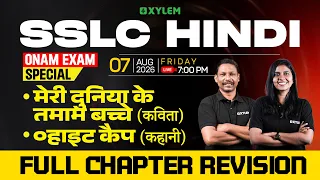
SSLC Hindi Onam Exam Special - Class 8 Kerala Board Hindi
14 views

Xylem SSLC
Notes
Video Summary
White Cap and My World’s Children – Key Lessons and Exam Focus
Overview of “White Cap” (Short Story) and “My World’s Children” (Poem)
“White Cap” is a Hindi short story set in Chhattisgarh, focusing on Keshav, a young boy from a poor laborer family, and his experiences in a city. “My World’s Children” is a modern Hindi poem by Adnan Kafeel Darwesh, envisioning a future generation of children living in a world without discrimination, boundaries, or war, and in harmony with nature. Both texts are part of the second unit for the exam and are frequently tested with…
White Cap and My World’s Children – Key Lessons and Exam Focus
Overview of “White Cap” (Short Story) and “My World’s Children” (Poem)
“White Cap” is a Hindi short story set in Chhattisgarh, focusing on Keshav, a young boy from a poor laborer family, and his experiences in a city. “My World’s Children” is a modern Hindi poem by Adnan Kafeel Darwesh, envisioning a future generation of children living in a world without discrimination, boundaries, or war, and in harmony with nature. Both texts are part of the second unit for the exam and are frequently tested with direct and conversation-based questions.
Main Characters and Setting in “White Cap”
The story centers on Keshav, an 8-year-old boy from a laborer family who moves from a village in Bemethra district, Chhattisgarh, to the city to join his parents. The narrative explores his struggles, dreams, and interactions with city children, highlighting themes of poverty, exclusion, and hope.
- Keshav: 8 years old, small, dark-complexioned, from a poor family, studies in class 3.
- Setting: Construction sites and temporary shelters in a city in Chhattisgarh.
- Family: Parents are laborers; Keshav’s grandfather sends him to the city after his annual exams.
Key Plot Points and Themes in “White Cap”
Keshav faces exclusion from city children’s cricket games due to his appearance and background. He is often mocked but remains patient and hopeful. Despite being used for errands and not allowed to play, he dreams of owning a bat, ball, and a white cap, symbolizing his aspirations and desire for acceptance.
- Exclusion and Mockery: City children do not let Keshav play and make fun of his looks and clothes.
- Dreams and Aspirations: Keshav wishes for a bat, ball, and white cap, but his parents cannot afford them.
- Accident and Empathy: Keshav climbs a building to retrieve a lost ball, falls, and is hospitalized. The children, realizing their mistake, show empathy and include him in their team, gifting him the white cap.
Important Vocabulary and Exam Terms
Understanding key Hindi terms and their meanings is crucial for answering exam questions accurately.
- Masdoor: Laborer
- Imarat: Building
- Ghar: Home
- Bemethra: District in Chhattisgarh
- Jid: Stubbornness
- Aksar: Often
- Muskurana: To smile
- Chotti: Small
- Sambhala: Dark-complexioned
- Nanhahath: Small hands
- Chulha: Stove
- Ghar ka kone: Corner of the house
Frequently Asked Exam Questions from “White Cap”
Exam questions often focus on character traits, plot events, and conversations. Key question types include:
- One-mark: Keshav’s age, appearance, class, and place of origin.
- Two-mark: Why Keshav’s grandfather sent him to the city; why Keshav was taken to the doctor.
- Four-mark: Write the conversation between Keshav and his grandfather about going to the city; conversation between Keshav and his mother upon arrival.
- Situational: Keshav’s experience when calling other children to play; how the children’s attitude changed after his accident.
“My World’s Children” – Poem’s Vision and Message
The poem by Adnan Kafeel Darwesh imagines a future where all children live together without discrimination, boundaries, or war. It emphasizes equality, freedom, and harmony with nature, challenging existing social rules and stereotypes.
- Equality: Children will play together, regardless of nationality, religion, or gender.
- Breaking Rules: Future children will challenge and break unjust societal rules.
- Nature Connection: Children will communicate with animals and insects, live freely, and build nests outside their “safe” homes.
- Anti-war Stance: Children will resist war by filling tanks with sand, burying guns, and turning roads into playgrounds.
- Universal Love: They will love those whom society taught them to hate, breaking down walls of prejudice.
Key Lines and Their Interpretations from the Poem
The poem uses vivid imagery and metaphors to convey its message. Understanding the meaning of specific lines is essential for writing the appreciation or summary.
- “Ek din bachche ek saath khelenge”: One day, children will play together, symbolizing unity.
- “Saaf sundar deewaron par pencil ki nok ragdenge”: Children will draw on clean walls, indicating breaking restrictive rules.
- “Kutto se, bakriyon se, hare tidde se baat karenge”: Children will talk to dogs, goats, and grasshoppers, showing harmony with all creatures.
- “Ek din tumhari tankon mein balu bhar denge”: They will fill tanks with sand, a metaphor for ending war.
- “Ek din pyar karenge un sabse jinse tumne nafrat karna sikhaya”: They will love those whom they were taught to hate, highlighting universal love.
Structure for Writing Poem Appreciation (Aashaya Tippani)
For exam answers, structure the appreciation in three paragraphs: introduction, main points, and conclusion.
- Introduction: Name of the poem, poet, and main theme (future generation, equality, peace).
- Main Points: Key ideas—children’s unity, breaking of unjust rules, connection with nature, anti-war actions, universal love.
- Conclusion: The poem’s message—hope for a peaceful, equal, and harmonious world; relevance to society; the poem’s unique and impressive style.
Exam Strategies and Answer Writing Tips
- Line-by-line Meaning: For poetry, understand and write the meaning of each line, especially for appreciation questions.
- Conversation Questions: For four-mark questions, write at least four lines of dialogue for each character, ensuring the conversation is logical and complete.
- Vocabulary: Memorize key Hindi words and their meanings as they are often tested directly or as options.
- Summary Writing: Focus on the main events, character traits, and the message of the story or poem.
- Use of Key Words: In answers, use terms like “samanta” (equality), “prem” (love), “shanti” (peace), “badlav” (change), “prakriti” (nature), “manavta” (humanity), “aasha” (hope), “prabhavshali” (impressive), “advitiya” (unique), and “mashhoor” (famous) to impress evaluators.
Common Pitfalls and How to Avoid Them
- Superficial Reading: Do not rely on summaries alone; understand the meaning of each line and word.
- Ignoring Vocabulary: Not learning key words can lead to loss of marks in direct questions.
- Incomplete Conversations: For dialogue-based questions, ensure both sides of the conversation are covered with sufficient lines.
- Missing the Message: In poem appreciation, always mention the poem’s central message and its relevance to society.
Sample Table: Key Exam Terms and Their Meanings
| Hindi Term | Meaning (English) |
|---|---|
| Masdoor | Laborer |
| Imarat | Building |
| Ghar | Home |
| Jid | Stubbornness |
| Muskurana | To smile |
| Sambhala | Dark-complexioned |
| Nanhahath | Small hands |
| Chulha | Stove |
| Deewaar | Wall |
| Balu | Sand |
| Bandook | Gun |
| Samanta | Equality |
| Prem | Love |
| Shanti | Peace |
| Prakriti | Nature |
| Manavta | Humanity |
| Advitiya | Unique |
| Mashhoor | Famous |
| Prabhavshali | Impressive |
Final Exam Takeaways
- “White Cap” and “My World’s Children” are high-weightage chapters; expect 20 marks worth of questions from these two.
- Focus on character traits, key events, and conversations for “White Cap.”
- For the poem, emphasize the vision of equality, breaking boundaries, harmony with nature, and anti-war sentiment.
- Practice writing structured answers with clear introduction, main points, and conclusion.
- Memorize key vocabulary and be prepared for both direct and indirect questions.
- Use previous years’ question papers for practice, as many questions are repeated or follow similar patterns.
Quiz
10 QuestionsClick on an option to find the answer
Question 1 of 10
Solution
Solution
Solution
Flashcards
10 CardsClick to reveal answerTap the card to see answer

