

FA-1 Didn't Go Well? - Class 10 Karnataka Board Science
Watch Video


Study smarter with Pi Lens
Get Notes, PYQs, Quiz and more for any Youtube video!

FA-1 Didn't Go Well? - Class 10 Karnataka Board Science
4 views

PW Karnataka 8, 9 & 10
Notes
Video Summary
Comeback Strategy for SSLC Students After Low FA-1 Scores
A low score in FA-1 does not determine your final outcome in SSLC. With the right approach, it is possible to achieve 95% or above in the final board exams. The key is to set a clear target, identify weaknesses, and follow a structured method for improvement.
Importance of Setting a Target
Setting a specific target for your final board exam score is essential for focused preparation. When you define your goal, you become mentally prepared to work towards it and are more likely to achieve it.
- Write…
Comeback Strategy for SSLC Students After Low FA-1 Scores
A low score in FA-1 does not determine your final outcome in SSLC. With the right approach, it is possible to achieve 95% or above in the final board exams. The key is to set a clear target, identify weaknesses, and follow a structured method for improvement.
Importance of Setting a Target
Setting a specific target for your final board exam score is essential for focused preparation. When you define your goal, you become mentally prepared to work towards it and are more likely to achieve it.
- Write down your current score and your target score for the final board exams.
- Commit to your target by stating it clearly and using it as motivation.
- Regularly review your progress towards the target to stay on track.
Analyzing FA-1 Performance and Identifying Weaknesses
Understanding why you scored low in FA-1 is crucial for making a comeback. Many students struggle due to unclear concepts, lack of practice, or not reviewing the paper properly.
- Identify which chapters or concepts were difficult in FA-1.
- Note down specific questions or topics where you lost marks.
- Acknowledge if you did not understand the first three chapters well, as this can make future topics even harder.
Three-Step Method for Improvement
A proven three-step method can help you transform your preparation and boost your scores. This method is used by top-performing students and is essential for concept clarity and exam readiness.
- Concept Clarity: Ensure you understand every concept in each chapter.
- Practice Different Sets of Questions: Solve a variety of questions, including previous year questions (PYQs), model papers, and preparatory papers.
- Seek Guidance: Get help from teachers or mentors to clarify doubts and receive direction.
- Apply all three steps consistently for best results.
- Do not skip any step, as each is critical for comprehensive preparation.
Overcoming Conceptual Gaps in Early Chapters
If you struggled with the first three chapters, it is important to address these gaps immediately. Future chapters will be more complex and require a strong foundation.
- Revisit the first three chapters and focus on understanding the core concepts.
- Use sample papers and revision materials to reinforce learning.
- Ask for help on specific doubts to avoid carrying forward misunderstandings.
Utilizing Practice Papers and Revision Resources
Regular practice with a variety of question papers is vital for exam success. Exposure to different question types prepares you for the actual exam and builds confidence.
- Solve sample papers, PYQs, and model papers for each chapter.
- Attempt preparatory papers under timed conditions to simulate the exam environment.
- Review solutions and understand mistakes to avoid repeating them.
Importance of Regular Updates and Staying Connected
Staying updated with important tips, class schedules, and notes is necessary for effective preparation. Being part of a study group or community provides motivation and access to resources.
- Join relevant WhatsApp groups or online communities for daily updates and class notes.
- Interact with peers and teachers to clarify doubts and share strategies.
- Stay informed about important dates and exam-related announcements.
Taking Immediate Action and Avoiding Procrastination
Delaying your preparation or waiting for the next exam can lead to regret. Immediate action ensures smoother progress and reduces last-minute stress.
- Start working on your weaknesses right now instead of postponing.
- Enroll in support programs or batches that offer structured guidance and resources.
- Avoid waiting until the last day or after the next exam to begin your comeback.
Motivation and Mindset for a Successful Comeback
A positive mindset and determination are essential for overcoming setbacks. Believing in your ability to improve and committing to hard work are key factors in achieving high scores.
- Remind yourself that a low FA-1 score is not the end; it is a wake-up call.
- Promise to work consistently and not give up until you reach your goal.
- Encourage friends to join you in the journey, as helping others reinforces your own learning.
Leveraging Guidance and Support Systems
Access to proper guidance can make a significant difference in your preparation. Structured support helps you stay accountable and receive timely feedback.
- Follow the guidance provided by experienced teachers or mentors.
- Participate in interactive sessions to resolve doubts.
- Share your progress and challenges regularly to receive personalized advice.
Key Reminders and Final Steps
To maximize your chances of scoring 95% or above, remember these essential points:
- Set your target score and commit to it.
- Identify and address conceptual gaps, especially in early chapters.
- Follow the three-step method: concept clarity, practice, and guidance.
- Utilize all available resources, including practice papers and revision notes.
- Stay connected for updates and support.
- Take immediate action and avoid procrastination.
- Maintain a positive and determined mindset throughout your preparation.
By following these strategies and maintaining consistent effort, you can transform your academic journey and achieve top scores in your SSLC exams.
Quiz
10 QuestionsClick on an option to find the answer
Question 1 of 10
Solution
Solution
Solution
PYQs
12 QuestionsClick on an option to find the answer
Question 1 of 12
The perimeters of two similar triangles ABC and PQR are 56 cm and 48 cm respectively. is equal to
Solution
In the given figure ABC is shown. DE is parallel to BC. If AD = 5 cm, DB = 2.5 cm and BC = 12 cm, then DE is equal to:
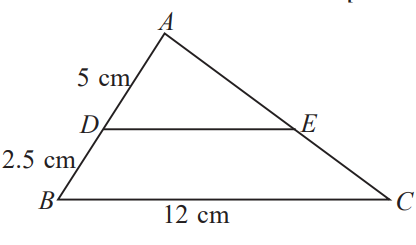
Solution
8 cm
If the diagonals of a quadrilateral divide each other proportionally, then it is a:
Solution
trapezium
Flashcards
5 CardsClick to reveal answerTap the card to see answer

