

JAC English 2026 - Class 10 Jharkhand Board English
Watch Video


Study smarter with Pi Lens
Get Notes, PYQs, Quiz and more for any Youtube video!
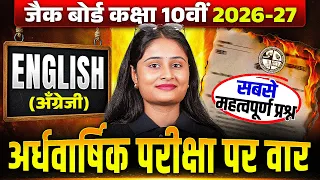
JAC English 2026 - Class 10 Jharkhand Board English
37 views

PW JAC Board
Notes
Video Summary
Class 10 English: Key Chapters and Exam-Focused Points
A Letter to God
This chapter is written by G.L. Fuentes and centers on Lencho, a poor and hardworking farmer living on a low hill. Lencho has strong faith in God and relies on his corn crop for survival. When a hailstorm destroys his entire crop, he writes a letter to God asking for 100 pesos to replant his field.
- Main character: Lencho, a poor farmer with unwavering faith in God.
- Setting: Low hill, corn farming.
- Key event: Hailstorm destroys Lencho’s crop.
- Lencho’s action: Writes to…
Class 10 English: Key Chapters and Exam-Focused Points
A Letter to God
This chapter is written by G.L. Fuentes and centers on Lencho, a poor and hardworking farmer living on a low hill. Lencho has strong faith in God and relies on his corn crop for survival. When a hailstorm destroys his entire crop, he writes a letter to God asking for 100 pesos to replant his field.
- Main character: Lencho, a poor farmer with unwavering faith in God.
- Setting: Low hill, corn farming.
- Key event: Hailstorm destroys Lencho’s crop.
- Lencho’s action: Writes to God for financial help (100 pesos).
- Postmaster’s role: Collects 70 pesos from employees and sends to Lencho.
- Lencho’s reaction: Upset, believes post office employees stole 30 pesos, calls them “a bunch of crooks.”
Important Questions and Answers: A Letter to God
This section covers the most frequently asked questions from the chapter, focusing on character sketches, events, and symbolic comparisons.
- Who wrote "A Letter to God"? G.L. Fuentes.
- What did Lencho hope for? Rain for his crops.
- What crop did Lencho grow? Corn (maize).
- What destroyed Lencho’s crop? Hailstorm.
- What did Lencho compare raindrops to? Gold coins; hailstones to silver coins.
- How much money did Lencho request from God? 100 pesos.
- How much did he receive? 70 pesos.
- Who helped Lencho? Post office employees, led by the postmaster.
- Lencho’s profession: Farmer.
Character Sketch: Lencho
Lencho is depicted as a poor, hardworking, and deeply religious farmer. He lives with his family on a low hill and depends entirely on his corn crop. His faith in God is so strong that he writes a letter asking for help after his crop is destroyed, believing God will provide. When he receives less than he asked for, he blames the post office workers, showing his innocence and simplicity.
- Traits: Poor, hardworking, strong faith, innocent, straightforward.
- Actions: Writes to God, trusts divine help, misjudges helpers.
Dust of Snow
This poem is written by Robert Frost and highlights how small incidents can bring significant positive changes in life. The poet, initially sad, experiences a mood change when a crow shakes snow from a poisonous hemlock tree onto him.
- Poet: Robert Frost.
- Central theme: Small things can bring big changes in mood and life.
- Key symbols: Hemlock tree (poison, sorrow), crow (agent of change), dust of snow (small positive event).
- Poet’s mood: Starts sad, becomes happy after the incident.
Key Questions and Symbolism: Dust of Snow
This section focuses on the poem’s symbols, meaning, and the poet’s transformation.
- Which tree is mentioned? Hemlock tree.
- Which bird is mentioned? Crow.
- Meaning of "dust of snow": Snow particles falling from a tree.
- Poet’s mood before the incident: Sad, sorrowful.
- What changed the poet’s mood? Snowflakes falling from the tree.
- What does the hemlock tree symbolize? Death and sorrow.
- Message: Small things can make a big difference.
Fire and Ice
"Fire and Ice" is a poem by Robert Frost discussing two possible ways the world could end: in fire (desire) or in ice (hatred). The poem uses these elements as metaphors for human emotions that can lead to destruction.
- Poet: Robert Frost.
- Fire symbolizes: Desire, greed, uncontrolled passion.
- Ice symbolizes: Hatred, cruelty, insensitivity.
- Message: Both excessive desire and hatred can lead to destruction.
Key Questions: Fire and Ice
This section addresses the symbolic meanings and consequences discussed in the poem.
- What does fire represent? Desire.
- What does ice represent? Hatred.
- What happens if hatred increases? Leads to violence and terrorism.
- How does fire (desire) destroy? By fueling anger and uncontrolled passion, leading to conflict.
A Triumph of Surgery
This chapter, written by James Herriot, is about Tricki, an overfed pet dog who becomes ill due to overeating and lack of exercise. His owner, Mrs. Pumphrey, loves him excessively and feeds him rich food. Tricki is hospitalized, not given surgery or medicine, but recovers through exercise and a controlled diet.
- Author: James Herriot.
- Main character: Tricki, an overfed pet dog.
- Owner: Mrs. Pumphrey.
- Reason for illness: Overeating, lack of exercise.
- Treatment: Exercise, controlled food, interaction with other dogs.
- Outcome: Tricki recovers without surgery or medicine.
Key Questions: A Triumph of Surgery
This section covers the main exam questions from the chapter.
- What kind of dog was Tricki? Overfed pet dog.
- How did Tricki fall ill? Overeating.
- Owner’s name: Mrs. Pumphrey.
- What did Mrs. Pumphrey feed Tricki? Cream, cake, chocolate.
- Where was Tricki taken? Hospital.
- How long was Tricki hospitalized? Two weeks (14-15 days).
- What helped Tricki recover? Exercise and playing with other dogs.
- Who called it "a triumph of surgery"? Mrs. Pumphrey.
Nelson Mandela: Long Walk to Freedom
This chapter is about Nelson Mandela, the first black President of South Africa, who took oath on 10th May 1994 in Pretoria. The chapter discusses the inauguration, Mandela’s respect for freedom fighters, and his views on duties and racial discrimination.
- Event: Nelson Mandela becomes first black President of South Africa.
- Date of oath: 10th May 1994.
- Location: Pretoria.
- Key message: Two duties in life—towards family and country.
- Apartheid: Racial discrimination based on color.
- Mandela’s struggle: Fought for equality and freedom for black people.
- Years spent in jail: Many years (exact number not specified).
- Type of government after Mandela: Democratic government.
Key Questions: Nelson Mandela
This section lists the main exam questions and their answers.
- When did Mandela take oath? 10th May 1994.
- Who was the first black President of South Africa? Nelson Mandela.
- Where was the inauguration held? Pretoria.
- Meaning of apartheid: Racial discrimination.
- Mandela’s definition of courage: Victory over fear.
- Two duties according to Mandela: Duty to family and to country.
- What did black people lack? Freedom and rights.
- What did Mandela fight for? Equality and freedom.
- Where did Mandela spend many years? Jail.
- Type of government after Mandela: Democratic.
Exam Strategy and Takeaways
Scoring well in the half-yearly exam is crucial as it affects final marks sent by the school. The exam will include objective and short-answer questions, with a focus on character sketches and key events from the main chapters. Revision should prioritize:
- Character sketches (especially Lencho).
- Symbolic meanings in poems.
- Key events and their consequences in each chapter.
- Direct factual questions (author, main character, setting, key incidents).
- Understanding of central themes and messages in poems and prose.
Consistent revision and focus on the above points will help maximize marks in the exam.
Quiz
40 QuestionsClick on an option to find the answer
Question 1 of 40
According to Mandela’s speech, what should never happen again in South Africa?
Solution
Oppression of one by another
Solution
In South Africa, what happens to a man who tries to live as a human being, according to the author?
Solution
He is punished and isolated
Flashcards
6 CardsClick to reveal answerTap the card to see answer

